A Backyard Oak Worth Saving Before The Bulldozers Arrive
What actually kills a healthy backyard oak, the trench a contractor cut for a patio drain, or the two slow years of decline nobody connected to it? By the time the canopy thins and the bark starts flaking, most homeowners are already calling a tree company Lansdale PA crews trust for removal, not rescue. That timing is the whole problem, and it catches careful homeowners off guard. A tree damaged during construction rarely dies on the spot, and the window to save it closes while it still looks fine.
Root Damage Shows Up Long After Digging
Roots do most of their work in the top eighteen inches of soil, spreading well past the drip line where a mini excavator likes to park. Cut or crush a quarter of them and the tree does not flinch that season. It coasts on stored energy, leafs out on time, and fools everyone into thinking it shrugged off the damage. A hurt oak keeps quiet about its injuries for a good three or four years. Demand for this kind of tree work keeps climbing across the region, too. The Business Research Company put the global landscaping services market, which includes tree care, at $668.97 billion in 2025, with $741.53 billion projected for 2026. That works out to a 10.8% compound annual growth rate, according to the firm’s February 2026 market report. Most of that spend, in our experience, goes to cutting trees down and hauling them off, not to keeping the ones already in the ground alive.
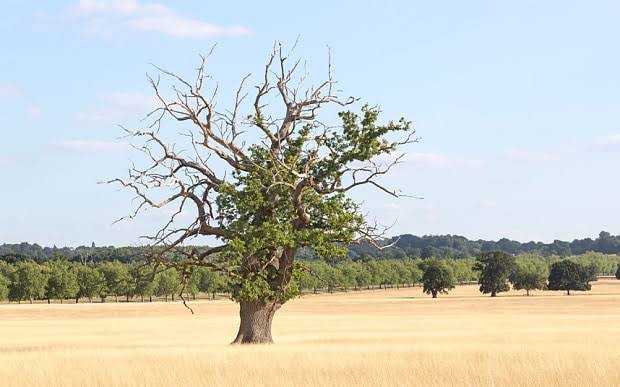
On the ground, the early signs are easy to wave off, and they are simple to blame on a dry summer. You get leaves a size smaller than last year and some dieback poking out at the crown. A thin patch on the south side, right where the excavator sat, usually shows up a season after that. By the time the bark looks loose, the vascular tissue underneath has already been struggling for a while. Most homeowners only clue in the year the oak finally drops a heavy limb.
Running The Numbers On Saving One Oak
Before you decide anything, put a real number on what the tree is actually worth to you. The USDA Forest Service offers a free tool called i-Tree that estimates the annual dollar value a specific tree returns in stormwater capture, shade, and cleaner air. A mature oak often pencils out higher than most people expect. A good tree company Lansdale PA homeowners hire will run that valuation before it quotes preservation, because the math changes the conversation. When the standing tree already saves you money every year, spending a little to protect its roots stops looking like a splurge.
Run the comparison for a quarter-acre Lansdale lot with one mature oak. Say the pre-work consult is free, the root barriers plus a season of monitoring run about $1,400, and the tree lives. Now price the other path once a neglected oak fails and has to come out. Figure $1,900 to take the dead oak down, $350 to grind the stump, and $650 for a young replacement that needs twenty years to cast the same shade. That path comes to $2,900 all in, and you still spend two decades staring at a sapling.
The gap is not close, and it does not shrink one bit if you wait. Protecting a mature oak’s roots costs far less than replacing the tree those roots feed. People stall because removal feels like the decisive fix and preservation feels like a maybe, but the numbers say otherwise.
Preservation Beats Replacement For Habitat
Here is where the habitat piece actually matters, and where the research gets blunt. Trees damaged during construction died at a measurably higher rate than undamaged ones, 22.7% mortality against 18.6% for the controls. Overall condition fell from 77.2% to 71.1% across five to eight years of follow-up, according to Arboriculture and Urban Forestry. A dead oak takes its whole ecosystem with it. The warblers and chickadees nesting in that canopy relocate to a neighbor’s maple within a season, and honestly you notice the quiet on a June morning. But the birds are not really the arborist’s problem to solve; the tree is, and a living tree keeps the habitat where it already stands. The case we see most often is a homeowner who assumed replanting would simply reset the clock. A replacement takes decades to host what the old oak hosted last spring.
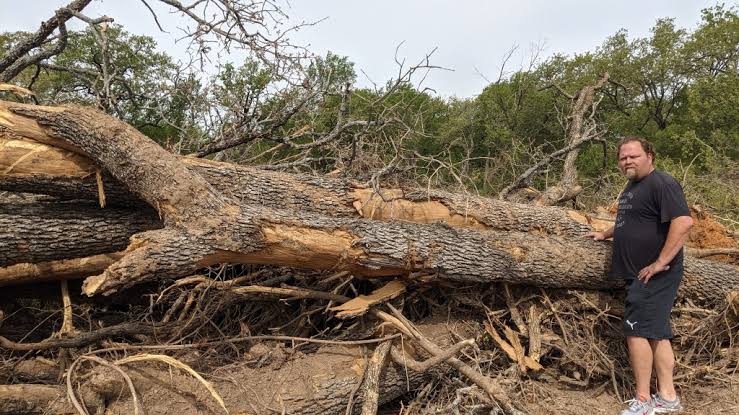
Preservation is not always the answer for a tree this far along. Some trees are too far gone, and a blunt arborist will tell you so before you spend a dollar. But a mature backyard oak that still leafs out is usually worth a pre-work consult and a root barrier before anyone reaches for a chainsaw. Call for the assessment while the tree still looks fine, because by the time it looks sick the cheap options are already gone. That one visit is the difference between keeping a tree that took forty years to grow and starting over from a stick.

- What to Expect During Your Dog’s First Visit to a Professional Groomer - September 21, 2026
- Why White Silkies Are the Best Pet Chickens for Families with Kids - September 18, 2026
- Pig Feed 101: A Beginner’s Guide to Feeding Your First Pigs - September 13, 2026