
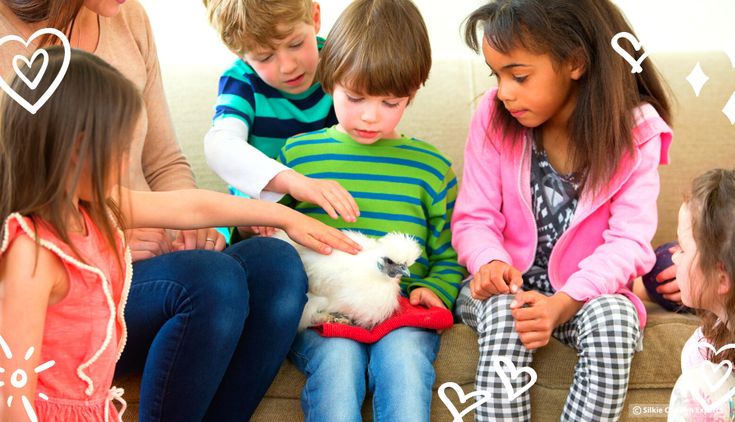
Why White Silkies Are the Best Pet Chickens for Families with Kids
If you have ever watched a child chase a leghorn around the yard for twenty minutes, you already know the problem with most chickens and kids. The bird does not want to be caught, the child ends up in tears, and nobody learns to love chickens that day.
White silkie chickens solve that problem almost completely. With their fluffy, fur-like feathers, calm dispositions, and genuine tolerance for being held, Silkies have earned a reputation as the go-to breed for families. They are the bird that sits in a child’s lap, and for many kids, a Silkie is the reason they fall in love with keeping chickens in the first place.
This guide covers why the white Silkie in particular makes such a wonderful family pet, what to expect from them, and how to set up a flock your kids can actually be involved with.
What Exactly Is a Silkie?
Silkies are one of the oldest chicken breeds in the world, with roots tracing back hundreds of years to ancient China. Marco Polo wrote about chickens with “fur like wool” during his travels, and many historians believe he was describing Silkies.
The breed looks unlike any other chicken. Their feathers lack the tiny hooks, called barbicels, that hold normal feathers together. Instead of smooth, flat plumage, Silkies have soft, loose, hair-like fluff that feels closer to a rabbit or a cat than a bird. They also have black skin, five toes instead of the usual four, turquoise-blue earlobes, feathered feet, and a fluffy crest of feathers on top of the head.
The white variety is the most popular of all, and it is easy to see why. A clean white Silkie looks like a small, round cloud. The white fluff shows off the breed’s unique texture better than any other color, and it is the variety most people picture when they hear the word Silkie.
Temperament: The Reason Families Choose Them
Temperament is where Silkies separate themselves from nearly every other breed.
Most chickens, even calm ones, maintain a healthy wariness of people. Silkies tend to genuinely enjoy human company. They are docile to a fault, rarely peck aggressively, and almost never fight with each other. A Silkie will often walk up to a person, crouch down to be picked up, and settle into a lap for as long as you let it stay there.
For children, this changes everything. A kid can catch a Silkie without a chase, hold it without a struggle, and put it back down without a scratch. The bird tolerates imperfect handling from small hands far better than flightier breeds. That does not mean children should be rough with them, but the learning curve is far gentler.
Silkies are also quiet by chicken standards. Hens make soft, murmuring sounds rather than the loud cackling of production breeds. If you have close neighbors, a small Silkie flock is far less likely to cause noise complaints than a flock of Rhode Island Reds.
Size and Manageability
Silkies are a bantam breed, which means they are small. Most weigh around two pounds, roughly a quarter the size of a standard laying hen. That size matters for families in a few practical ways.
A two-pound bird is easy for a child to carry. It eats less, needs less coop space, and does less damage to a garden when it escapes. A Silkie cannot fly over a low fence, cannot knock over a small child, and cannot deliver an intimidating peck. Everything about the bird is scaled to a kid-friendly level.
The small size does come with a tradeoff on eggs, which we will get to honestly in a moment.
What About Eggs?
Here is the part where honesty matters. Silkies are not production layers. A Silkie hen lays roughly 100 to 150 small, cream-colored eggs per year, compared to 250 or more from a breed like an Australorp. The eggs are perfectly good to eat, but they are small and the supply is modest.
Families who want a freezer full of eggs should keep a production flock alongside their Silkies or choose a different breed entirely. But many families find that a couple of small eggs a week is actually perfect for young children. A kid who collects one egg and gets excited about it is having a better experience than a kid drowning in dozens.
There is also a hidden bonus. Silkies are famously broody, meaning they frequently decide to sit on nests and hatch eggs. A broody Silkie will happily hatch eggs from your other hens, and watching a Silkie mother parade a line of fluffy chicks around the yard is one of the best chicken experiences a child can witness. Many families keep Silkies specifically as natural incubators for the rest of the flock.
Caring for Silkies With Kids
Silkie care is simple enough that children can take real responsibility for it, which is one of the quiet benefits of the breed.
Housing. Silkies cannot fly, so roosts need to be low, around 12 to 18 inches off the floor, or they will sleep in the bedding. They need a dry coop, because that fluffy plumage does not shed water the way normal feathers do. A wet Silkie stays wet, so shelter from rain matters more for this breed than most.
Feeding. Standard chick starter, then layer feed, plus clean water. Nothing unusual. Children can handle daily feeding and water checks easily.
Grooming. The white variety does show dirt, and their feathered feet pick up mud. Many families make Silkie bath time a fun supervised activity, and the birds generally tolerate it well. Keep their vent feathers trimmed if manure builds up, and check their crest feathers so it does not grow over their eyes.
Predator awareness. This is the one serious caution. Silkies cannot fly away from danger and their fluffy head feathers limit their vision, so they are more vulnerable to cats, dogs, and hawks than other breeds. A secure run is not optional. Teach children to latch gates every single time.
A Few Things to Know Before You Start
Silkies should not be mixed carelessly with large, pushy breeds, because their gentle nature means they lose every confrontation at the feeder. If you keep a mixed flock, give Silkies their own space or raise them with similarly docile companions.
Roosters are a separate question. Even Silkie roosters are known for being gentler than average, but any rooster can turn territorial, and young children should always be supervised around one. Many families keep only hens, which is easy to arrange when ordering chicks.
Finally, buy from a reputable source. Silkie quality varies widely, and well-bred birds with good type and temperament are worth seeking out. Poorly bred Silkies can carry the same docility but with more health issues.
The Bottom Line
Not every chicken breed should live near children, but the Silkie might as well have been designed for it. Small, soft, quiet, patient, and endlessly huggable, a white Silkie is the breed that turns chicken keeping from a chore into a genuine family hobby. The eggs are a bonus rather than the point. The point is a bird your five-year-old can carry around the yard like a stuffed animal, one that will still be waiting at the fence for her the next morning.
Start with two or three hens, build a dry coop with a secure run, and let your kids take ownership of the daily routine. For most families, the only regret is not getting Silkies sooner.

- Why White Silkies Are the Best Pet Chickens for Families with Kids - September 18, 2026
- Pig Feed 101: A Beginner’s Guide to Feeding Your First Pigs - September 13, 2026
- Mini Goldendoodle Puppies: The Complete Buyer’s Guide from America’s Top Designer Breeder - August 5, 2026


