
Pig Feed 101: A Beginner’s Guide to Feeding Your First Pigs
Few animals convert feed into meat as efficiently as a pig, which is a big part of why pigs are such a popular first livestock project for small farms and homesteads. But that efficiency only works when the feeding program is right. Walk into a feed store and you will find a wall of bags labeled starter, grower, and finisher, all with different protein numbers, and it is easy to leave more confused than when you arrived. The good news is that choosing the right pig feed is far simpler than the packaging suggests, once you understand what a pig actually needs at each stage of growth.
This guide walks through the basics so your first pigs grow fast, stay healthy, and reach butcher weight without draining your wallet.
Start With How a Pig Digests Food
Pigs are not ruminants like cattle or sheep. They have a single stomach, much closer to yours than to a cow’s, which means they cannot live on grass and roughage alone. A cow extracts energy from pasture through fermentation, but a pig needs concentrated nutrition: grains, protein sources, vitamins, and minerals in a form its digestive system can absorb directly.
This is why pasture alone will not finish a pig. Pigs on pasture root, graze, and enjoy the outdoors, and forage does contribute some nutrition, but the bulk of their diet has to come from a balanced ration. Anyone who tells you pigs can thrive on grass and kitchen scraps alone is setting you up for slow gains and, in the case of young pigs, real health problems.
The Three Stages of Pig Feed
Commercial pig feed comes in stages, and the stage names tell you exactly who the feed is for.
Starter feed is for weaned piglets, typically 18 to 22 percent protein. Young pigs are growing muscle and bone at a furious rate and need the highest protein levels of their lives. If you buy feeder pigs at 40 or 50 pounds, they should be on starter or an early grower ration.
Grower feed carries pigs through the middle of their growth phase, usually 15 to 16 percent protein. This is the longest feeding stage and where most of your feed budget goes.
Finisher feed is for the final stretch before butcher, around 13 to 14 percent protein. Growth has slowed relative to intake, and the goal shifts to laying down condition and reaching market weight efficiently.
The protein numbers matter because underfeeding protein stunts growth, while overfeeding it wastes money. Pigs cannot store extra protein, so anything beyond what they need for growth is excreted. Matching the ration to the stage is one of the easiest ways to keep feed costs sensible.
How Much Feed Does a Pig Actually Eat?
This is the question every first-time pig owner asks, and the honest answer is more than you expect. A pig growing from 50 pounds to 270 pounds, a typical market weight, will eat somewhere around 650 to 750 pounds of feed total, give or take. That figure assumes a feed conversion ratio in the range of 3 to 3.5, meaning the pig needs roughly three pounds of feed for every pound of weight gained.
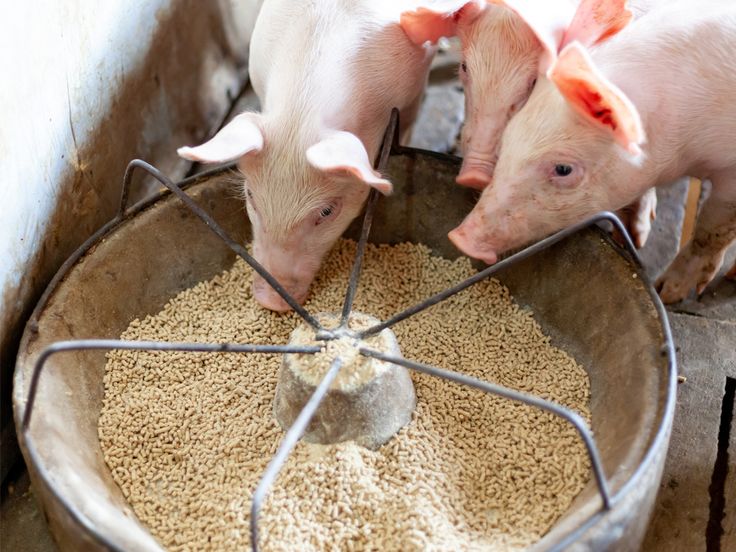
Daily intake climbs steadily as the pig grows. A 50-pound piglet might eat 3 pounds a day, while a 200-pound pig can easily eat 6 to 7 pounds. Most people feed free-choice from a self-feeder, letting pigs eat as they want, which works well because pigs rarely overeat balanced rations the way they will overeat grain dumps or scraps.
If you are raising two pigs for your freezer, plan on roughly a ton and a half of feed for the pair, and budget accordingly. Buying feed by the bag at 50 pounds each gets expensive fast, so many small producers buy by the half-ton or full ton once they know what works.
Protein Quality: Why Lysine Deserves Your Attention
The crude protein number on the tag is only part of the story. Pigs have a specific requirement for amino acids, the building blocks of protein, and lysine is the one that runs out first. A ration can look adequate on crude protein while falling short on lysine if the protein sources are low quality.
Most commercial feeds are formulated with this in mind, using soybean meal and other lysine-rich ingredients. Where beginners get into trouble is home-mixing. It is entirely possible to mix your own pig feed successfully, and plenty of farmers do it, but it requires balancing corn with a proper protein supplement, not just pouring corn and table scraps into a trough. Corn alone is badly deficient in lysine, and pigs fed mostly corn grow slowly and poorly no matter how much they eat.
If you want to mix your own ration, start with a proven recipe from an extension service or a feed mill, and use a balanced premix rather than guessing at mineral quantities.
Water: The Cheapest Feed Ingredient You Will Ever Provide
Pigs eat more when they drink more, and water intake is tied directly to feed intake. A pig can drink 3 to 5 gallons a day in warm weather, and a lactating sow far more. If the waterer is clogged, dirty, or awkward to reach, feed intake drops and growth slows, and most beginners never think to check the water first when gains disappoint.
Nipple waterers work but should be mounted at shoulder height and checked daily, since they clog and pigs will play with them. A trough is simpler for small setups but needs scrubbing regularly, because pigs will root bedding and manure into anything open. Clean water is not a luxury for pigs. It is half the feeding program.
What About Scraps and Garden Surplus?
Pigs are famous for eating anything, and there is truth behind the reputation, but there are two important cautions.
The first is legal. Many states prohibit feeding raw food waste or garbage to pigs, and the federal rules on swine feeding are strict about meat and meat-derived scraps because of the risk of diseases like trichinosis and, historically, foot-and-mouth disease. Check your state regulations before you build a feeding plan around restaurant scraps or table waste. Cooked, processed food waste is treated differently than raw, but the rules vary and the penalties are real.
The second is nutritional. Garden surplus, windfall apples, spent produce, and crop residues are wonderful supplements, and pigs love them, but they dilute the ration. A pig filling up on cucumbers and melon rinds is a pig eating less balanced feed, and gains will slow if the supplements make up too much of the diet. Treat extras as exactly that, extras, and keep the complete ration as the foundation.
Feeder Design and Preventing Waste
Pigs waste feed, and wasted feed is wasted money. A well-designed feeder pays for itself quickly. Trough feeders work for small groups but invite rooting and lying down, so many keepers prefer self-feeders with a lid or a design where pigs must lift or nudge a flap to eat. Whatever you use, mount it or weigh it down, because a pig will flip anything light enough to flip.
Feeders also need regular cleaning. Wet or soiled feed sours fast, and pigs will refuse it, or worse, eat it and get sick. A few minutes with a scraper every few days keeps the feeder functional.
Storage and Spoilage
Pig feed should be stored in a dry, sealed container off the ground, whether that is a metal bin, a bulk tank, or a stack of bags on pallets under a tarp. Rodents are drawn to pig feed like nothing else, and moisture is the other enemy. Moldy feed is not a minor issue for pigs. Mycotoxins from moldy grain can suppress growth, cause reproductive problems, and in bad cases kill. If feed smells musty, is caked, or shows visible mold, the cheap option is throwing it out. Feeding it is the expensive option.
A Simple Plan for Your First Pigs
For most beginners raising two or three feeder pigs for the freezer, the program is straightforward. Buy healthy weaned pigs around 40 to 50 pounds. Feed a starter or grower ration free-choice from a self-feeder, keep clean water in front of them at all times, and switch to finisher feed around 150 pounds or so. Add garden and produce surplus as treats, not staples. Watch that they are eating eagerly and filling out steadily, and plan on roughly four to five months from weaning to butcher weight.
Do that, and your first pig project will go about as smoothly as livestock projects ever go, and the pork in the freezer will taste all the better for having been raised right.

- Pig Feed 101: A Beginner’s Guide to Feeding Your First Pigs - September 13, 2026
- Mini Goldendoodle Puppies: The Complete Buyer’s Guide from America’s Top Designer Breeder - August 5, 2026
- The Ground Ride Is The Weakest Link When You Fly With A Crated Dog - August 4, 2026