
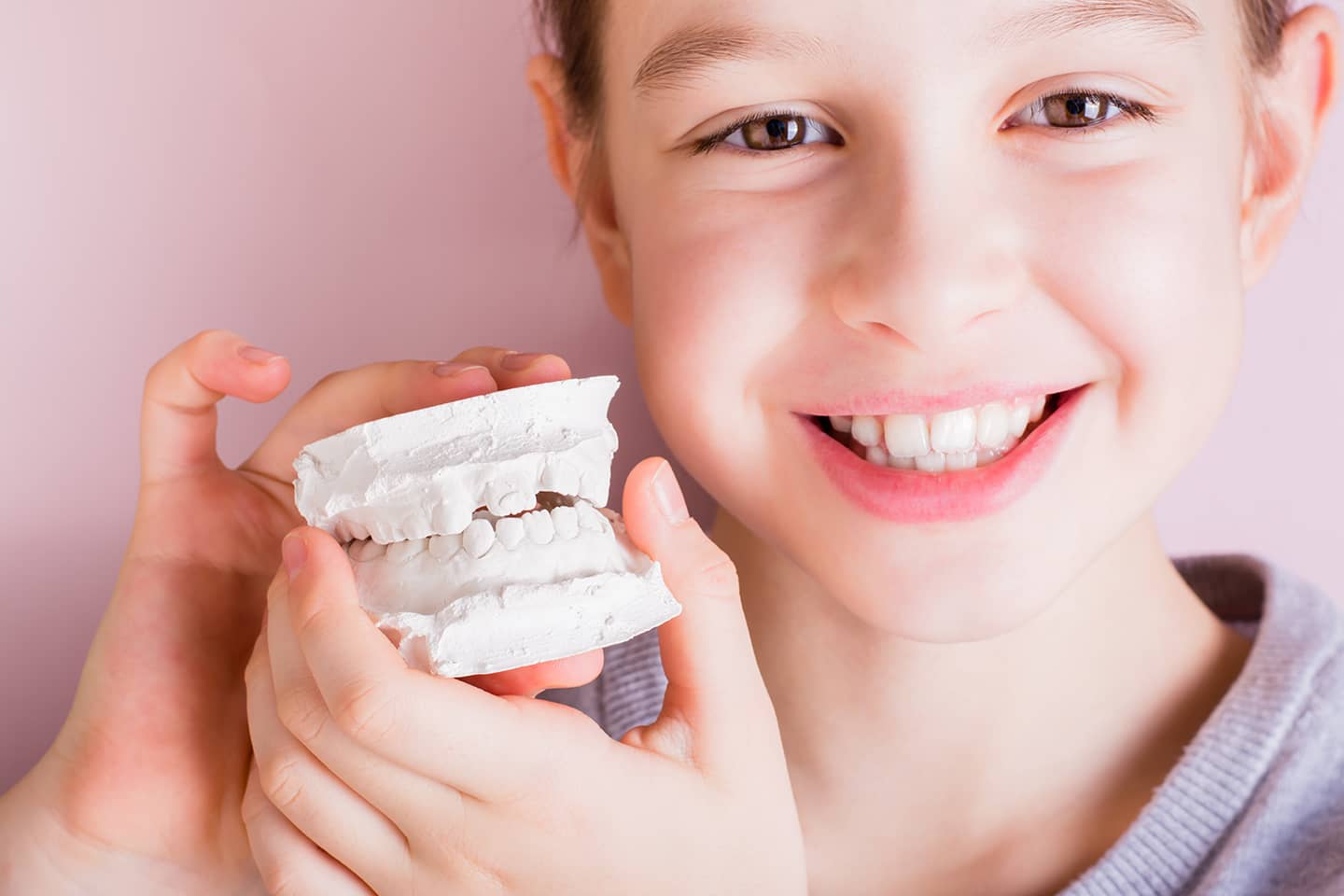
When a Child’s Bite Needs More Than Straight Teeth
A family in the east San Fernando Valley, Spanish with grandma and Mandarin at dinner, brought their seven-year-old in for a chewing problem. He chewed everything on the left side and left the right alone, though his teeth looked fine. Two prior checkups waved it off, and the case we see most often is just that, a straight-looking smile hiding a drifting jaw, which sends parents searching for kids braces Reseda CA. The teeth were the distraction, and the bite was the real story. The gap between the two is wider than most parents are ever told, and it shapes everything that follows.
A Bite Problem Hides Behind Straight-Looking Teeth
Straight teeth and a healthy bite are not the same thing, and that gap is where these cases slip through. A functional problem lives in how the upper and lower jaws meet, not in whether the individual teeth happen to look tidy. An underbite pushes the lower teeth past the top ones, and a crossbite grinds enamel down on one side. A deep overbite can even change the way a child forms certain sounds. You can have every tooth in a neat row and still have a jaw that closes wrong. Speech is often the first tell a parent catches, a slushy s or a th that never sits right, because the tongue keeps working around a bad bite. Chewing on one side is the other giveaway, and kids adapt so fast that they hide it well, which is how the jaw issue gets missed. Parents rarely walk in asking about the jaw at all. They walk in asking why one word sounds off, or why a normal lunch takes forty minutes. In a busy bilingual home those small signs get chalked up to a picky kid or two languages still sorting themselves out, and the bite keeps right on hiding.
Functional Appliances Do What Braces Alone Cannot
Brackets and wires move teeth. What they cannot do on their own is guide a growing jaw into a better position, and that is the whole point of bite-and-alignment work. Palatal expanders widen a narrow upper jaw so the lower one finally has room to seat correctly. Functional devices then bring the lower jaw forward while a child is still actively growing. The reason age matters here is mechanical, since a young jaw stays pliable and the child’s own growth does a real share of the work. Habits feed into it as well. The University of Rochester Medical Center notes that thumb or finger sucking after age 5 raises the chance of developing malocclusion. That is why an expander is sometimes paired with a plan for breaking a lingering habit. Correct the arch but leave the thumb in place, and you quietly undo your own work over the next year.
What the First Eighteen Months Actually Look Like
The first week is mostly about getting used to something that now lives on the roof of the mouth. Meals run slow before they run normal again. By month three most kids forget the expander is there, and a parent notices the midline sitting differently in photos. Real structural change often shows up on the scans within the first 90 days, before the mirror catches up at all. None of it hurts the way parents brace for, and the soreness reads like new shoes, not anything sharp. From there the work is steady and unglamorous, small turns and short check-ins across a twelve to eighteen month arc.
None of this is guesswork anymore. A November 2025 systematic review of Class II bite cases pooled 11 studies and 749 patients, with an average start age of 9.43 years. It reported that treating early closed the bite one to two years sooner and lowered a documented trauma risk, even when the final result matched waiting. The same review flagged an overjet over 5 mm in the 7 to 14 age range as more than doubling the odds of a fractured front tooth. What nobody can cleanly tell you is how much of one child’s result came from the appliance versus the growth coming anyway, because you cannot run the same kid twice. Early bite correction buys years you cannot get back later.
Correcting the Jaw Early Sets Up Everything Later
The payoff for getting this right early is not a nicer class photo. It is a jaw that closes evenly, a bite that chews without wearing one side down, and cleaner speech for the next decade. This is why the American Association of Orthodontists recommends a first orthodontic check-up by age 7, while a child still has both baby and permanent teeth. At that age a specialist can spot a developing bite before it locks into place. If your child is under about ten and the bite is clearly off, an appliance can usually still steer it. Wait much past that and you are often into a longer, harder fix, sometimes surgery instead of a simple device. The early consult is a low-stakes visit for the family, a chance to ask questions in whichever language feels easiest and to leave with a plan rather than a worry. Cost is a fair concern too, and the early evaluation is usually the cheapest visit in the whole process. For a bilingual household weighing kids braces Reseda CA against waiting, the honest answer is that a consult costs one visit and buys options, while waiting quietly closes them.

- What to Expect During Your Dog’s First Visit to a Professional Groomer - September 21, 2026
- Why White Silkies Are the Best Pet Chickens for Families with Kids - September 18, 2026
- Pig Feed 101: A Beginner’s Guide to Feeding Your First Pigs - September 13, 2026