
The Moss On Your Barn Roof Is Not the Real Problem
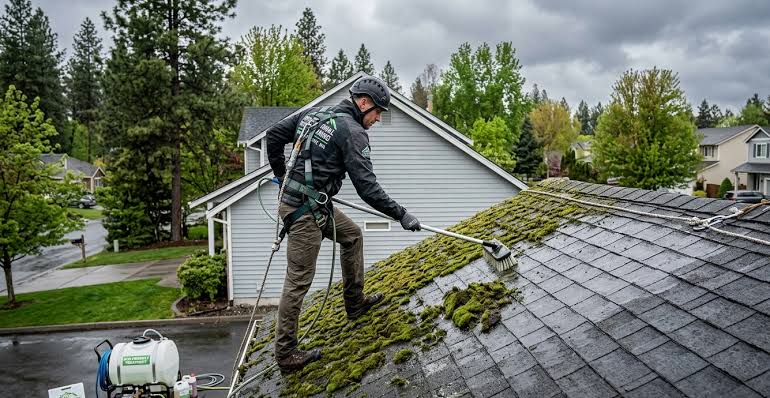
Moss is not dirt. Moss is not just something that makes a barn roof look neglected from the road. Moss is a moisture reading you can take from the driveway. On a 5-acre horse property set inland from Lake Michigan, that green fuzz spreading across the pole barn and the tired asphalt house roof is telling you the wood underneath is staying wet. The real problem is never the moss itself, it is the trapped moisture and poor airflow slowly softening the deck over your animals’ stalls. That is why owners around here eventually call roofing contractors charlevoix mi instead of a pressure-washing crew, once they understand what the stain is actually reporting.
Moss Looks Cosmetic But Signals Trapped Moisture
Moss holds water against the shingles like a sponge, and it clings first to the shaded north-facing slopes that dry slowly. The case we see most often is a barn roof that looks fine from the yard but has a soft deck over the stalls where moss has sat through four winters. Under that green mat the protective granules wash off, and the roof deck, meaning the sheet of plywood or planks the shingles are nailed to, never dries out. Wood that stays damp feeds rot and mold, and on a livestock building that moisture drifts down into the air your horses breathe every night. So the moss is almost beside the point, just the flag on a wet-deck problem that began long before the color showed up.
Ventilation Myths That Rot A Roof Deck
Here is where the myths do the most damage. The common belief is that sealing an attic up tight keeps a barn or house warmer and drier through a Michigan winter. In reality a sealed cavity with no airflow traps the moisture rising off the animals and the wet bedding, and that vapor condenses on the cold underside of the deck. Another myth is that piling on more insulation fixes a damp attic. Insulation without intake and exhaust venting just hands the moisture a colder surface to condense on. Balanced ventilation means air enters low at the soffit vents tucked under the eaves and leaves high at the ridge, washing the underside of the deck dry all winter long. When that path is blocked, the roofing contractors Charlevoix MI owners rely on almost always find the soffits stuffed with insulation and no working ridge vent at all. A roof deck rots from the inside long before the shingles look worn out. The 2025-2026 winter only raises the stakes. Forecasters see a weak La Nina holding through the heart of the season, with a 60 percent chance of ENSO-neutral returning by January through March, per the National Weather Service Detroit and Pontiac outlook from December 2025. A long, damp, near-average winter keeps a poorly vented deck wet for months. That deck was on borrowed time before the first hard freeze.
Why Pressure Washing Makes It Worse
Pressure washing feels like the obvious fix, and it does the most quiet harm. It blasts off the granules that protect asphalt shingles and drives water up under the courses into the deck you meant to save. On an older roof it lifts shingles and opens the gaps that let the next storm soak the wood. And the storms here do not play gentle. In January 2026, a lake-effect blast buried Lake Michigan towns under more than a foot of snow and set off a dangerous flash freeze that dropped temperatures as much as 10 degrees in an hour, according to FOX Weather. Water forced under loosened shingles before that kind of freeze expands into ice and pries everything wider. Soft washing with the right treatment kills the moss without stripping the roof, but it grows back if the deck stays wet.
Fix The Airflow Not Just The Surface
The lasting fix treats the roof as a system, not a surface to scrub. That means opening the soffit intake, unblocking or adding a ridge vent so the attic can breathe, replacing any decking gone soft, and only then treating the moss with something that will not tear the shingles up. Fixing the airflow is what stops the rot, because a dry deck does not grow moss or rot out over your animals. A free inspection that pulls back the soffit and checks the deck for moisture tells you far more than a look from the driveway. Get the ventilation right on both the barn and the house, and the green stops coming back on its own. The moss was never the emergency, but the wet wood underneath it always was.

- What to Expect During Your Dog’s First Visit to a Professional Groomer - September 21, 2026
- Why White Silkies Are the Best Pet Chickens for Families with Kids - September 18, 2026
- Pig Feed 101: A Beginner’s Guide to Feeding Your First Pigs - September 13, 2026


