
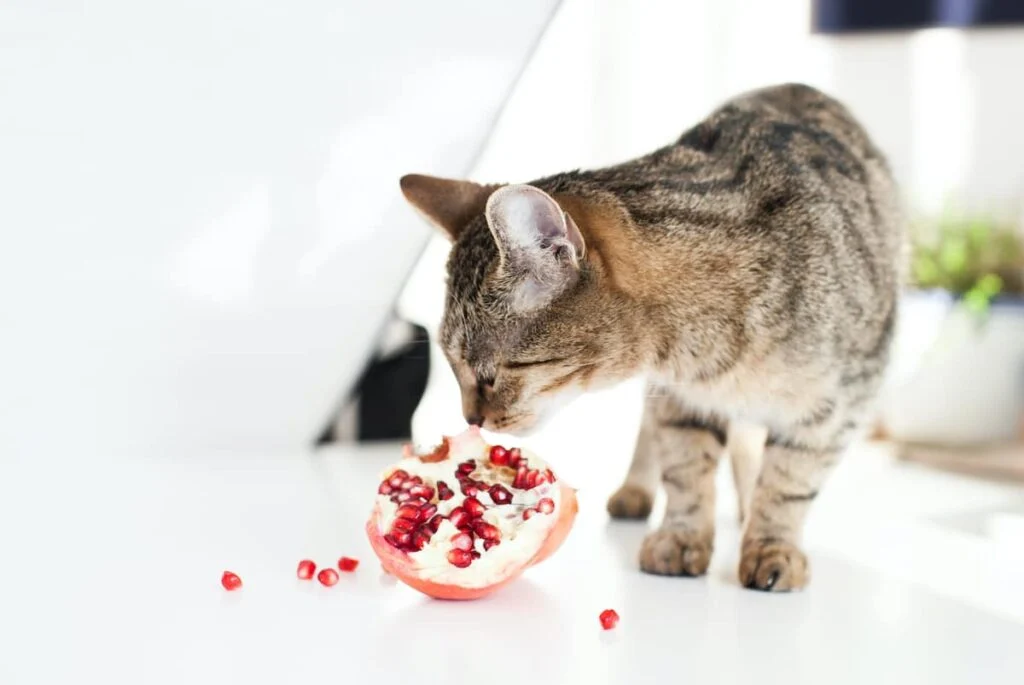
Is Pomegranate Safe for Cats? What Every Pet Owner Needs to Know
Understanding Your Cat’s Diet
Cats are obligate carnivores. This means their bodies are built to digest and absorb nutrients from meat, not plants. Unlike omnivores like humans or dogs, cats get their essential nutrients—like taurine, vitamin A, and arachidonic acid—from animal sources.
So, when it comes to adding fruits like pomegranate to their diet, the question isn’t just whether it’s safe, but whether it’s even necessary.
What Is Pomegranate and Why Do Humans Love It?
Pomegranate is a fruit packed with antioxidants, vitamin C, potassium, and fiber. It’s often considered a superfood due to its anti-inflammatory and heart-healthy properties. For humans, it’s a smart addition to the diet—but that doesn’t automatically translate to being a healthy treat for cats.
Can Cats Eat Pomegranate?
The short answer is yes — but with important limitations.
The fruit is not toxic to cats, but that doesn’t make it an ideal snack. While a small lick or bite of the juicy arils may not harm your feline, feeding pomegranate regularly or in larger quantities can cause gastrointestinal issues.
Cats simply don’t digest plant-based foods the same way humans do, and most of the nutrients in pomegranate are either unnecessary or poorly absorbed by a feline digestive system.
Possible Side Effects of Feeding Pomegranate to Cats
1. Upset Stomach
The high fiber and sugar content can lead to vomiting, diarrhea, or abdominal discomfort. This is especially true if your cat has a sensitive stomach or has never eaten fruit before.
2. Choking or Blockage
The seeds inside the arils are small and hard. For a curious cat that tries to chew or swallow them whole, there’s a risk of choking or gastrointestinal obstruction.
3. Allergic Reaction
While rare, some cats might be sensitive to certain plant-based compounds, leading to itching, swelling, or changes in behavior. Always watch your cat closely after trying something new.
Do Cats Gain Any Health Benefits from Pomegranate?
Despite its rich nutritional profile, pomegranate offers little to no health benefit for cats. Here’s why:
- Vitamin C: Cats synthesize this naturally in their liver.
- Fiber: Their digestive systems are short and optimized for meat, not fiber.
- Antioxidants: Cats need animal-based antioxidants like taurine, not polyphenols from fruit.
While the fruit won’t poison them, it doesn’t enhance their well-being either.
What About Pomegranate Juice?
Avoid giving your cat pomegranate juice. Even in small amounts, it’s too sugary and acidic. Plus, most commercial juices contain preservatives and artificial sweeteners — all harmful to your pet.
Fresh juice might seem safer, but without the fiber and with concentrated sugar, it still poses risks. Your cat’s best drink is always clean, fresh water.
Accidentally Fed Your Cat Pomegranate? Here’s What to Do
If your cat snuck a bite of pomegranate off the table or licked a dropped aril, don’t worry. In most cases, nothing serious will happen. However:
- Monitor for vomiting, diarrhea, or signs of discomfort
- Don’t give any more
- Make sure your cat drinks water
- Contact your veterinarian if symptoms persist or worsen
Even if a food is not toxic, it’s always best to err on the side of caution.
Are There Any Fruits Cats Can Eat?
While cats don’t need fruit, a few options are generally safe in small amounts:
- Blueberries – A good source of antioxidants and low in sugar
- Melon (cantaloupe or watermelon) – Refreshing and hydrating
- Peeled apples – Only without seeds or skin
- Pumpkin – Great for digestion in small quantities
Fruits should always be served plain, seedless, and in moderation.
Safer Treat Alternatives
Instead of experimenting with human foods, consider these cat-friendly treats:
- Freeze-dried meat bits
- Commercial cat treats with real chicken or fish
- Small pieces of cooked plain chicken or turkey
- Wet food toppers designed for cats
Cats are often picky, but they respond well to protein-rich rewards — the kind their bodies were made to enjoy.
Expert Advice and Reliable Sources
When it comes to your pet’s health, always rely on credible resources. AnimalsInfo provides clear, veterinarian-reviewed guidance on a wide range of animal-related topics, including diet, behavior, and wellness. Their content is tailored for everyday pet owners who want simple, accurate answers.
Their can cats eat pomegranate article offers a well-rounded view based on both science and common-sense pet care.
Conclusion: Keep It Simple — Stick to What Works
While pomegranate may not be harmful in very small amounts, it’s not recommended as part of a regular feline diet. The risks — digestive upset, choking, and allergic reactions — outweigh any minor curiosity or taste benefits.
Remember, cats are not small humans. Their biology, nutritional needs, and digestive systems are completely different. If you’re unsure about feeding your pet something new, consult your veterinarian or check reliable sites like AnimalsInfo before offering that “harmless” bite.