Implant Anchored Dentures End The Daily Fight With Slipping Plates
Loose dentures are not the price of getting older. That belief costs people years of decent meals. A lower plate that clicks, slips, and floats up the moment you bite into anything firmer than pasta is a mechanical failure, not a rite of passage. Plenty of Omaha metro retirees have been told to just live with it, adhesive tube in the cabinet, corn on the cob off the menu. It does not have to stay that way, which is why more of them now ask a dental implant la vista ne provider about anchoring the bottom denture to the jaw. The fix is real, and the bite comes back.
Loose Dentures Are Not A Normal Age Tax
Here is what happens under a lower denture. The moment the natural teeth come out, the jawbone that held them starts to shrink, a little every year, because nothing stimulates it anymore. The ridge a lower plate rests on flattens, and a denture shaped for last year’s jaw floats on this year’s. So it clicks. It rocks. It lifts off the gum when you bite anything firm. The complaint we hear most often is not pain, it is that constant click at dinner and a plate that will not sit still. None of that is a tax you owe for turning seventy. It is bone loss doing what bone loss does.
Relines Only Delay The Real Problem
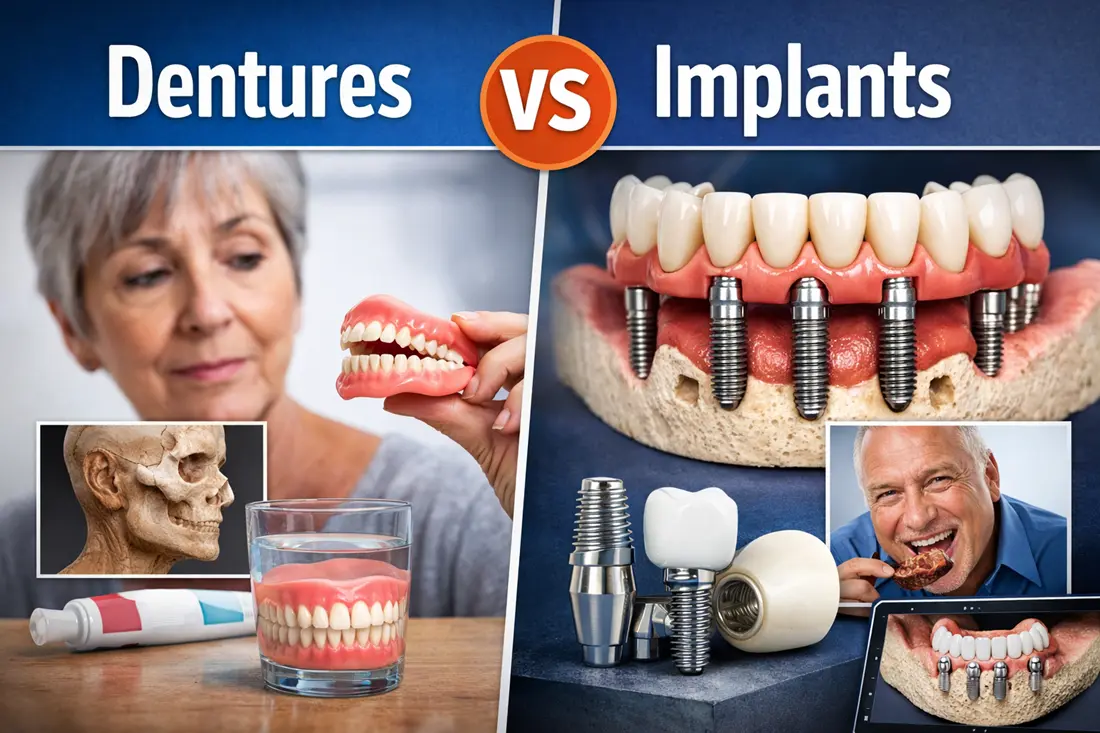
A reline just repacks fresh acrylic against the shrunken ridge so the plate fits for a while. It does nothing to stop the shrinking underneath. A decade ago that was the whole playbook, a new reline every year or two and a bigger tube of adhesive once it wore out. Patients on a fixed income kept paying, and that lower plate was living on borrowed time the whole way. Today the fix is different. Two to four implants go into the jawbone, the bone grips them over a few months, and the denture clips onto the posts instead of floating on gum. The shrinking slows. Relines never bought that.
Implant Anchors Change What You Can Eat
The payoff shows up right at the dinner table. A denture anchored to implants does not move, so your bite force goes into the food instead of into holding the plate down. Apples come back. Steak comes back. Corn on the cob, the one thing nearly every denture wearer quietly gives up, comes back. The mechanics are simple: the plate is fixed to bone, not balanced on a shrinking ridge, so a normal bite returns and stays. Anyone pricing a dental implant la vista ne procedure should ask exactly how the denture attaches, because a snap on overdenture and a fixed full arch bridge chew and cost very differently. Even implants are not maintenance free, and any honest advocate says so out loud. In May 2026, Newswise reported that 10% to 20% of implant patients develop peri-implantitis, an aggressive bone infection around the implant, and that standard antibiotics often fail against it. The takeaway is not that implants are risky. It is that the cleaning routine around them is not optional, and a good provider walks you through it before you ever sign.
Think about the household math for a fixed income retiree in the Omaha metro. It is not unusual to meet someone who spends more each year on the dog’s dental cleanings than on their own mouth, adhesive and reline visits included, and still cannot bite into an apple. Anchoring the lower denture flips that equation. The money stops going toward temporary fixes that expire on a schedule, and it starts buying something that holds for years. Food that was off the table for a decade goes back onto it. That is the part no reline ever delivered, and it is why the eating question, not the cosmetic one, is worth leading with.
How Long Do Implant Anchored Dentures Last?
The implants last decades, often the rest of your life, because titanium fuses to living bone and stays put. The denture that clips onto them is the wearing part, and it may need new clips or a fresh coat of acrylic every few years. That is routine upkeep, not the yearly scramble a plain denture demands.
Will Gum Disease Stop Me From Getting Implants?
Often it is manageable, but it has to be treated first, because an implant placed into inflamed tissue tends to fail. Gum disease is often why these teeth were lost to begin with. The National Institute of Dental and Craniofacial Research puts total periodontitis at 42.2% of adults aged 30 and older, with 7.8% in the severe range. Treat that first, then place the implants.
A Firm Bite Is Worth The Planning
Fixing a slipping lower denture is not an afternoon errand. It takes imaging, a plan for how many implants go where, sometimes a bone graft to rebuild a ridge that has already worn too thin, and a few months of healing while the jaw grips the posts and locks them in. That planning is the point. The reward is a plate that stays put, a bite that handles real food, and an end to the adhesive and yearly relines. Most retirees who have worked around a loose denture for years decide the stability was worth every week of the wait. Get the plan right, and the daily fight with a slipping plate is over.

- A Seasonal Roof Checklist Every Rural Property Owner Needs - July 12, 2026
- Why Hand Tamping a Kennel Run Pad Costs More Than Renting a Roller - July 12, 2026
- How Homes With Big Dogs Wreck Their Siding Faster - July 12, 2026