
What A Layout System Actually Costs A Two Welder Shop
Most shop owners assume welding is the slow part of a rail job. It is not; the real drag is railing layout, the hours spent marking steel by hand before anyone strikes an arc. This breakdown makes a plain argument a numbers-first owner can test on a spreadsheet. An automated layout table can earn back its five-figure price inside a few months, on recovered throughput and overtime alone. The bottleneck we see most often in a two-welder shop is not the weld, it is the mark.
Manual Railing Layout Is The Real Bottleneck
Marking a rail run by hand ties up your most experienced worker for hours, and experienced workers are getting harder to keep. In June 2026, Fortune reported that around 78% of Americans say they have noticed a spike in young people entering trades like welding, carpentry and electrical work. That figure came from a 2024 Harris Poll for Intuit Credit Karma. More entrants sounds like relief on paper. In practice, green welders take years to lay out a complex railing cleanly, and every hour a master welder spends marking is an hour he is not welding. A shop with two welders has no bench depth, so one slow marking job backs up the whole week.
The Hidden Cost Of Overtime And Rework
Overtime is where the margin quietly bleeds out. When marking runs long, the welds get pushed to Friday and Saturday, and those hours cost time and a half. Rework compounds it, because a mismeasured hole or a mislaid picket means cutting and re-welding, which burns both consumables and calendar. On a fixed-bid rail job none of that overtime is billable, so it comes straight off what you keep. Most owners never total it, because it hides across a dozen small jobs instead of landing as one ugly line.
What Automation Adds And What It Removes
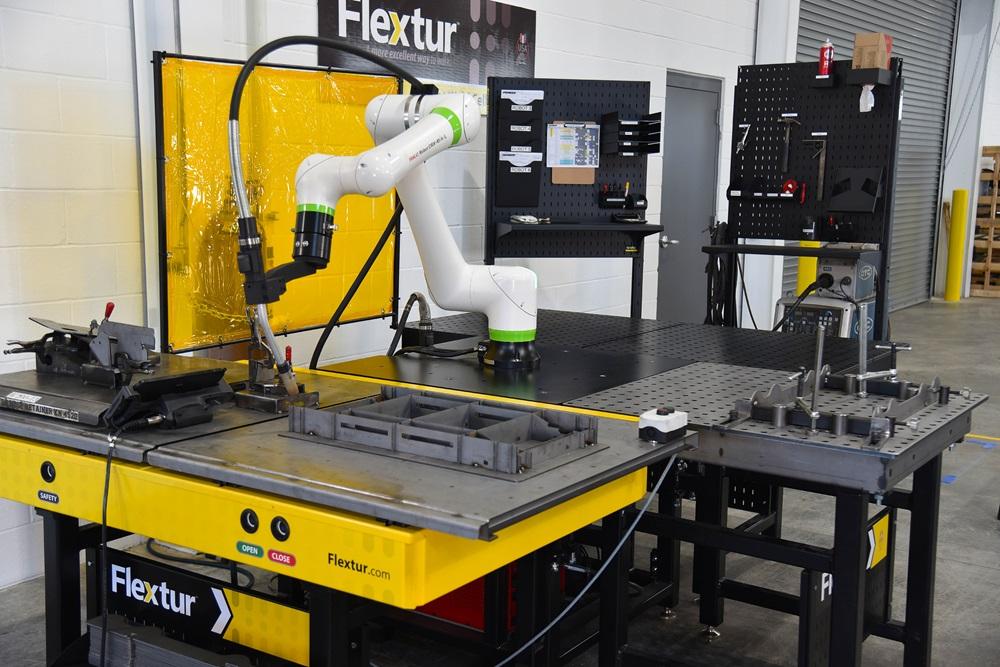
An automated table projects the CAD drawing straight onto the steel, so railing layout stops being a measure-and-chalk exercise and becomes a place-and-tack one. It removes the marking step and hands the job to a less-experienced worker, which frees your master welder for the arc. It also reshapes your floor plan, and that part is worth planning around. OSHA’s welding standard requires all combustibles be relocated at least 35 feet from the welding work site. So the new table needs a spot that keeps hot work clear of stock and packaging.
Expect a real adjustment period rather than an overnight fix. In the first week the table mostly slows you down while the crew learns the software. By week three the layout time on a standard run is visibly shorter. Within 90 days most hands stop reaching for the tape measure at all. Before you commit, model the change on paper first. SCORE, the SBA’s free volunteer mentor network, publishes cash-flow templates built for exactly this kind of purchase.
Months To Payback For A Small Shop
Here is the arithmetic on a real-shaped example. Say the table lands at $38,000 all in, with shipping, setup, training and software bundled into that figure. Say manual marking eats 12 hours a week across two welders, and cutting that to 4 hours frees 8 hours weekly. At a $65 loaded shop rate, that is $520 a week, or roughly $2,080 a month in recovered capacity. Add the overtime you stop paying, call it $600 a month at time and a half, and you are clawing back close to $2,680 every month. Divide $38,000 by $2,680 and payback lands around 14 months. Honestly, closer to 9 once you count the rush jobs you can now take without adding a shift. Either way the machine clears its own cost well inside two years, which is the number a small shop actually has to beat.
Run The Numbers Before The Next Rush
None of this turns on a slick sales pitch. It turns on whether your marking hours are big enough to matter. Pull your last three months of job tickets, total the layout time honestly, and put it against a bundled quote. For most two-welder railing shops carrying steady overtime, the payback math clears well before the machine wears in. Do the calculation before the next seasonal rush, not during it. That is when every recovered hour is worth the most, and when a backed-up bench costs you the jobs you have to turn away.

- A Seasonal Roof Checklist Every Rural Property Owner Needs - July 12, 2026
- Why Hand Tamping a Kennel Run Pad Costs More Than Renting a Roller - July 12, 2026
- How Homes With Big Dogs Wreck Their Siding Faster - July 12, 2026